 Graham Joyce
1996
Recently, Orion Books began a run of seminal horror/sci-fi/fantasy novels under the imprint of Gollancz. Apart from gathering together a good handful of respected authors and novels (including Ray Bradbury's Something Wicked This Way Comes and Poppy Z. Brite's Exquisite Corpse), these new printings have excellent cover art. That might seem like a fairly redundant comment, but I believe it shows that Orion genuinely care about their products. After all, how often have you sought out a novel by an established/favourite author, only to find it's been saddled with godawful cover art? Some major league publishers are guilty of this; I'm not just picking on the small press, who stick skulls on the cover of every horror title they publish.
Anyway, Graham Joyce writes the kind of horror fiction that manages to fool you into believing that you're reading something completely different. This put me off THE TOOTH FAIRY to start with, because it seemed to be trying far too hard to be a family drama with a 'fantasy' element. That, coupled with Joyce's tendancy to use peculiar synonyms [obsolescently, anyone?] makes it a little tough to get into.
After losing a tooth, seven-year-old Sam Southall sticks it under his pillow and subsequently summons a tooth fairy. This creature initially appears as a vile humanoid with sharp teeth, ragged clothes and a foul mouth, but as the years progress and it continues to visit Sam, it's appearence changes in some quite unexpected ways...The book follows Sam Southall through to his teenage years, as he discovers - yes, you guessed it - how the world really works.
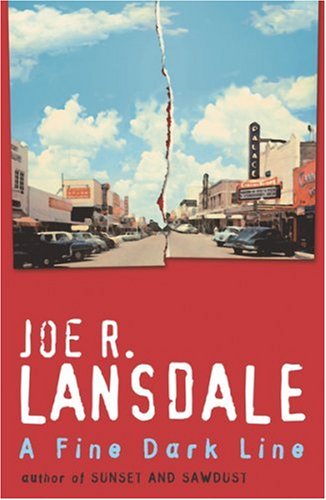
THE TOOTH FAIRY is a coming-of-age tale, although unlike books with similar themes (such as Something Wicked This Way Comes or A Fine Dark Line) it's one imbued with a crude vulgarity that blossoms into a perverse eroticism as Sam and his friends discover masturbation and the allure of the female form. I don't think I've ever read a horror novel with quite so many references to young boys playing with themselves, or how being around women gives them a 'fierce erection'.
To be honest, it's a little off-putting; I have no qualms in reading about the main character's awkward ascent into and through puberty, but I don't really want it ramming down my throat as much as Joyce does. See, I can't even write a review about the book without slipping in a smutty innuendo.
THE TOOTH FAIRY is also marred by a few implausible characters and situations. Sam's psychiatrist, whom he visits often throughout the story, never feels or sounds like one right until the end, when he starts to act more like a friend than a therapist. Sam and his friends also find themselves embroiled in a truly hideous Scout troupe, which never quite feels right - and in fact only really seems like a convulted way of generating one of the book's (admittedly effective) horrific moments.
However, these are examples of what could be construed as mis-steps rather than a bad novel as a whole. Sam, his friends, their families, and the Tooth Fairy itself, are all handled extremely well. Of particular note is the introduction of Alice, a girl who initially annoys and perplexes Sam, but gradually becomes one of his closest friends. The way the Tooth Fairy insinuates itself into the lives of those around Sam is both creepy and baffling - does it genuinely want to protect Sam, or does it enjoy messing with the minds of those close to him purely for it's own insidious amusement?
THE TOOTH FAIRY is neither a flawed masterpiece nor a below-average cult novel. It has some very good ideas, but ruins them with a preponderancy towards uncomfortable (not in a good way) vulgarity of both language and tone. What elements of horror there are in this are actually quite powerful, as is the handling of the passage of time (the book starts, I would say, in the early 60's). Not excellent, but not that terrible, either.



 Posts

